

Are Peptides Steroids? The Honest Answer for Natural Lifters
No, peptides are not steroids. They are completely different types of molecules that work through completely different mechanisms. The one line version: Anabolic-androgenic steroids are lipid soluble compounds that can cross cell membranes and bind intracellular androgen receptors. Most peptide hormones, by contrast, act through receptors on the cell surface, triggering intracellular signaling pathways. Their molecular structures and biological targets are different.
But here is the part most articles skip: just because peptides are not steroids does not mean they are natural, safe, or allowed in drug tested sports. That distinction matters more than the definition, and this guide explains it honestly.
What Are Peptides?
Peptides are short chains of amino acids linked together. Your body makes hundreds of them naturally to send signals between cells.
Think of peptides as text messages between your cells. One cell sends a short chemical message, another cell receives it and responds. Insulin is a peptide. The hunger hormone ghrelin is a peptide. Many of the compounds bodybuilders inject, like BPC 157 and TB-500, are synthetic versions of signaling peptides.
Here is where it gets confusing: the word “peptide” covers three very different categories, and people mix them up constantly.
1. Peptides your body makes from food. When you digest protein, your gut breaks it into peptides and amino acids. Collagen powder, for example, is full of peptides. These are completely ordinary.
2. FDA-approved peptide medicines. Insulin for diabetes, semaglutide (Wegovy for weight loss, Ozempic for type 2 diabetes), and tesamorelin for excess belly fat in people with HIV are all peptides. These went through full clinical trials and are prescribed by doctors.
3. Gray-market research peptides. BPC 157, TB-500, CJC-1295, ipamorelin, sermorelin, GHRP-6, and AOD-9604 fall here. They are sold online labeled “for research use only, not for human use,” which everyone understands is a legal fiction. They have little to no human clinical trial data.
When someone asks “are peptides steroids,” they are almost always asking about category 3. Keep these three tiers in mind, because most confusion about peptides comes from mixing them up.
The distinction matters in practice:
| Approved peptide medicines | Research peptides | |
|---|---|---|
| Examples | Insulin, semaglutide, tirzepatide, tesamorelin | BPC-157, TB-500, CJC-1295, ipamorelin |
| Indication | A specific disease (diabetes, weight loss, HIV-related belly fat) | None approved; marketed for injury recovery and muscle gain |
| FDA approval | Yes, for the approved use | No |
| Human evidence | Large trials for the approved use | Mostly animal studies; a few small human pilots |
| Supervision | Prescribed and monitored by a doctor | None; bought online and self-administered |
| Legal status | Legal medicine | Sold “for research use only”; legal gray zone |
This is also why you cannot talk about “peptide benefits” as one thing. Insulin and BPC-157 share a chemical category and almost nothing else. Every claim about peptides has to name which tier it means, or it means nothing.
What Are Anabolic Steroids?
Anabolic steroids are synthetic versions of testosterone built on a distinctive four-ring, cholesterol-based structure. Testosterone itself, nandrolone, trenbolone, Dianabol, and Anavar all belong to this family. The name tells you what they do: “anabolic” means tissue-building, “androgenic” means masculinizing, and every steroid delivers both in some ratio. Effects differ by compound, dose, duration, and route; no two steroids carry identical suppression or risk profiles. They work by entering your cells, binding to androgen receptors, and regulating the transcription of genes involved in protein synthesis and muscle growth.
The key word is “directly.” Steroids activate androgen receptors inside the cell and regulate the transcription of genes involved in protein synthesis. That androgenic signaling, combined with suppression of the hormone system that controls testosterone production (the HPG axis), can substantially reduce natural testosterone production and cause testicular atrophy, with severity depending on the compound, dose, duration, and individual response. Steroids also carry serious cardiovascular and liver risks.
One clarification: “steroid” is also a broad word. Corticosteroids such as prednisone act through glucocorticoid receptors and are not muscle-building drugs. When lifters say “steroids,” they mean anabolic-androgenic steroids (AAS), and that is what this article compares against.
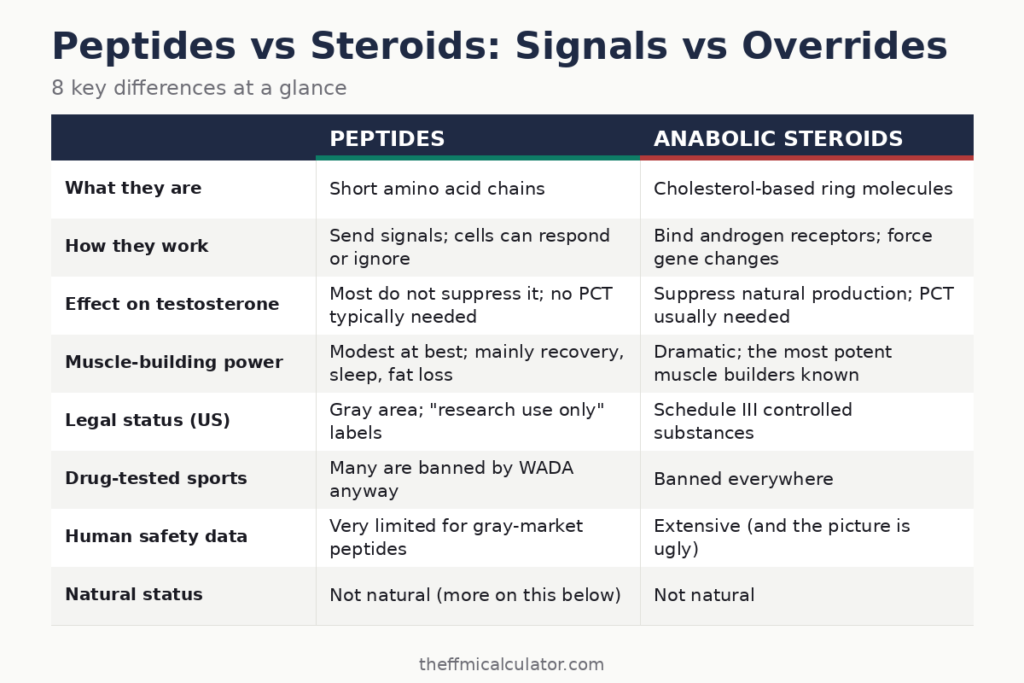
Peptides vs Steroids: Side-by-Side Comparison
| Peptides | Anabolic Steroids | |
|---|---|---|
| What they are | Short amino acid chains | Four-ring cholesterol-based molecules |
| How they work | Bind cell-surface receptors; trigger signaling cascades | Bind androgen receptors inside cells; strongly stimulate muscle protein synthesis |
| Effect on testosterone | Most do not suppress it; no established PCT protocol exists | Suppress natural production; PCT is common but not a universal protocol |
| Muscle-building power | Compound-dependent biological effects; meaningful muscle-building and recovery benefits remain unestablished for commonly marketed gray-market peptides | Dramatic; the most potent muscle builders known |
| Legal status (US) | Gray area; “research use only” labels | Schedule III controlled substances |
| Drug-tested sports | Prohibited in tested sport. BPC-157: WADA S0; TB-500: prohibited for years, named explicitly since 2018; GH secretagogues: WADA S2 | Prohibited in tested sport (WADA S1); controlled-substance status varies by country |
| Human safety data | Very limited for gray-market peptides | Extensive (and the picture is ugly) |
| Natural status | Not natural (more on this below) | Not natural |
Why Does Everyone Confuse Peptides With Steroids?
Four reasons, and they are all understandable.
First, the needle. Most gray market peptides are injected, just like steroids. In most people’s minds, injectable muscle compounds equal steroids. But insulin is also injected, and nobody calls insulin a steroid. The delivery method says nothing about what the drug is.
Second, the “research use only” label. Peptide websites sell vials labeled “not for human use” while obviously selling to humans. This shady labeling makes peptides feel like underground drugs, which is exactly the vibe steroids have.
Third, growth hormone secretagogues, compounds that trigger your body to release more growth hormone. Peptides like CJC-1295 and ipamorelin work this way. Since growth hormone itself sits in the gray zone of performance enhancement, anything that boosts it gets mentally filed next to steroids.
Fourth, the GLP-1 halo effect. Drugs like semaglutide and tirzepatide made peptides mainstream and respectable. That glow spilled over onto unapproved peptides, making them feel safer and more legitimate than they are. The current “trinity stack” you hear about in podcasts, a GLP-1 for fat loss plus a growth hormone peptide plus testosterone, has made peptide use look like a mainstream longevity protocol rather than an experiment. Andrew Huberman, a Stanford neurobiology professor, put it bluntly: the word “peptide” has become so broad it no longer describes any single scientific category.
One more sign of how mainstream this has become: reported use of BPC-157 rose 33-fold between 2020 and 2026, from 4 users in Q1 2020 to 134 in Q1 2026. That comes from an analysis of 15.2 million patient records (Venkatakrishnan et al. preprint, Sept 2026; reported by AJMC, Oct 2026). The confusion is not going away on its own.
How Do Peptides and Steroids Work Differently?
This is the core difference, and it is simple.
Steroids act from inside the cell. A testosterone molecule enters a muscle cell, locks onto the androgen receptor, travels into the nucleus, and turns on muscle-building genes. This is a direct, potent activation of the androgen receptor pathway, which is why steroids build muscle so dramatically.
There is a chemical reason for this difference. Steroids are lipid-soluble, so they pass straight through the cell membrane and work inside the cell. Peptides are water-soluble chains, too large and too charged to cross the membrane, so they must dock onto receptors on the cell surface instead. The size difference is concrete: sermorelin has 29 amino acids, growth hormone has 191, and a testosterone molecule weighs less than a tenth as much as sermorelin. That difference in solubility shapes the mechanism for most peptide hormones, though specific mechanisms vary considerably by compound. The same size and solubility problem is why most gray-market peptides have poor oral bioavailability and are injected instead of swallowed.
Peptides act from outside the cell. A peptide like ipamorelin docks onto a receptor on the cell surface and triggers the release of more growth hormone. Ipamorelin was first characterized as a growth hormone secretagogue by Raun et al. in 1998, and it works precisely this way: binding a surface receptor, never entering the nucleus. The strength of the response depends on the receptor, the dose, and the cell’s state. Many peptides, like BPC-157, do not even have a clearly identified receptor. Scientists know they do something in animals, but the exact docking mechanism is still unknown.
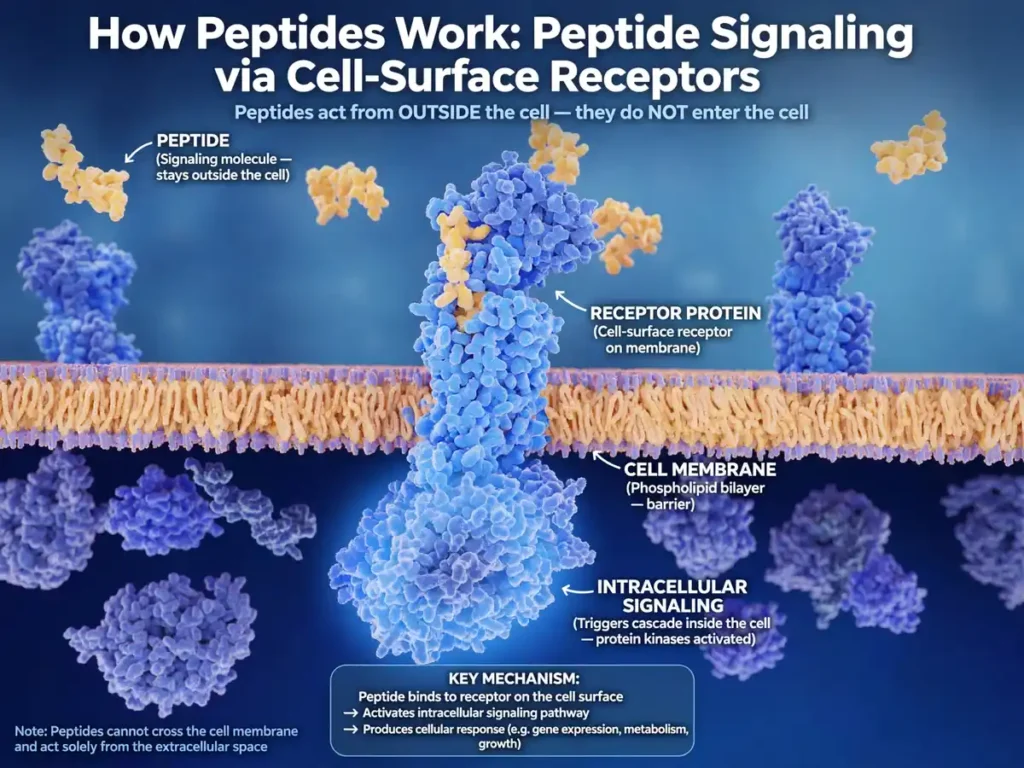
A useful way to remember it: steroids act through androgen receptors inside the cell, peptides act through signaling receptors on the cell surface. That structural difference is why their effects diverge so sharply.
Do Peptides Build Muscle Like Steroids Do?
No. Not even close, and anyone telling you otherwise is selling something.
Steroids directly drive protein synthesis far beyond natural levels. That is why some steroid users in the 1995 Kouri study exceeded FFMI 30, while the nonusers in that same study topped out around 25 (normalized FFMI). Those were the limits of that sample, not a universal ceiling.
Peptides work indirectly. Some growth hormone secretagogues stimulate the body’s own GH release and can raise IGF-1 levels, but the size of that effect and its clinical significance depend on the compound, dose, and duration. Human evidence for actual muscle-building outcomes remains limited. The ceiling of that route is growth hormone itself, and growth hormone is not a strength drug. A 2017 meta-analysis of 11 placebo-controlled trials in 254 healthy young adults found GH increased lean body mass and reduced fat, but did not significantly improve muscle strength or aerobic capacity. Evidence for anaerobic performance was limited to one study, which did find an increase (Hermansen et al. 2017). Serum IGF-1 can help indicate whether a growth hormone secretagogue is affecting the GH/IGF-1 axis. But an increase does not establish meaningful muscle growth, improved recovery, or clinical benefit. Those outcomes require separate evidence. BPC-157 and TB-500 are marketed for healing injuries, not building muscle. The most-cited BPC-157 study, Chang et al. 2014, showed effects on tendon fibroblasts, but in lab cultures, not in human trials. A 2019 review by Gwyer et al. reached the same conclusion across the musculoskeletal literature: promising in animals, unproven in humans. In online forums, the common anecdotal pattern is that peptides help with recovery and sleep, but they do not produce steroid-like size gains. That is anecdote, not evidence, but it matches what the limited human data suggest.
Based on current human evidence, anabolic steroids have demonstrated substantial muscle-building effects, while commonly marketed gray-market peptides have not established comparable muscle-building or recovery benefits.
What Does the Latest Human Research Actually Say About Peptides?
Two major 2026 reviews examined the human evidence, and both landed in the same place.
The first, a structured narrative review in JBJS Reviews (Villegas Meza et al., May 2026), covered injectable peptides in sports medicine through August 2025. It found that GLP-1 drugs were the only peptide class with reproducible trial evidence, and only for knee osteoarthritis symptoms driven by weight loss. Regenerative peptides like BPC-157 and thymosin derivatives, and GH secretagogues like CJC-1295 and ipamorelin, “remain investigational, with uncertain safety profiles, product quality concerns, and widespread antidoping restrictions.” The authors graded the recommendation strength for injectable peptides as predominantly C, the weakest tier.
The second, a scoping review in the American Journal of Sports Medicine (Tewari et al., August 2026), examined six popular peptides: BPC-157, TB-500, CJC-1295, MK-677, ipamorelin, and GHK-Cu. It found that 67% of the published research used preclinical animal models, mostly rats. Human studies were few, mostly uncontrolled, and showed modest improvements at best. The conclusion: the claimed recovery and performance benefits “remain unsubstantiated by current human trials.” The review also flagged real documented risks, including insulin resistance and congestive heart failure linked to MK-677.
The key point for lifters: animal evidence and biological plausibility do not establish that BPC-157 or TB-500 improves recovery in humans. Neither review identified any peptide approved for musculoskeletal recovery.
Here is the evidence by compound:
| Compound | Main marketed purpose | Human evidence for muscle/recovery |
|---|---|---|
| BPC-157 | Injury recovery | Insufficient |
| TB-500 | Tissue repair | Insufficient |
| CJC-1295 | GH stimulation | No established muscle-building benefit |
| Ipamorelin | GH stimulation | No established muscle-building benefit |
| Tesamorelin | Visceral fat reduction | Clinical evidence for its approved indication, not bodybuilding muscle growth |
| Semaglutide | Weight management | Strong clinical evidence for weight management, not muscle building |
Do Peptides Affect Testosterone? Do You Need PCT?
For most peptides, no to both.
Anabolic steroids can suppress the HPG axis. Some users seek medical treatment after discontinuation, but there is no universally established PCT protocol. BPC-157, TB-500, and GHK-Cu are not anabolic steroids and are not established testosterone suppressors the way steroids are. But their endocrine effects and long-term safety have not been adequately studied, so the absence of PCT is not proof of zero hormonal consequences.
The nuance: growth hormone secretagogues like ipamorelin, CJC-1295, and tesamorelin do modulate the GH/IGF-1 hormonal axis. That is a hormonal effect, just not a testosterone effect. SARMs can suppress the HPG axis but less completely than anabolic steroids at studied doses. In a phase II trial involving healthy older men and postmenopausal women, enobosarm (ostarine) reduced SHBG and total testosterone in men at certain doses, without significant reductions in free testosterone, LH, or FSH. These results should not be generalized to every SARM or younger male users. No published clinical trial of RAD-140 in healthy men exists.
So “peptides don’t mess with your hormones at all” is overstated. Peptides are not established testosterone suppressors, which is why PCT is not standard practice. But GH-related peptides do influence the growth hormone axis, and their long-term endocrine effects are unstudied.
Can Peptides Push You Past the FFMI 25 Screening Line?
This is the question nobody else is answering, and it is the most important one for natural lifters.
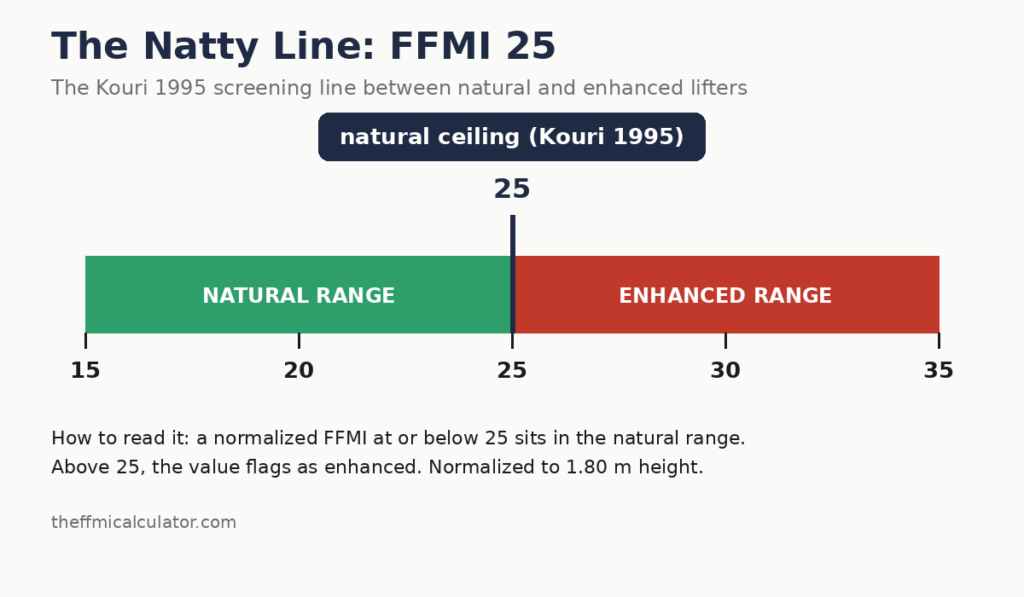
(Quick context if you are new here: FFMI, or fat-free mass index, is the standard measure of how muscular someone is relative to their height. A normalized FFMI of around 25 is widely used as a screening reference for natural status. Unlike BMI, which cannot tell muscle from fat, FFMI accounts for muscle mass. This site has a free calculator for it.)
The FFMI 25 figure comes from the 1995 Kouri study, which found that of 157 lifters studied (83 steroid users, 74 nonusers), none of the nonusers exceeded a normalized FFMI of 25. The authors themselves called these findings preliminary. The number works as a rough historical screening line, but it was never established as a proven biological maximum that no natural lifter can exceed. For context on where different scores sit, see what counts as a good FFMI score.
Peptides do not directly add muscle tissue the way steroids do, so they will not catapult a lifter from FFMI 22 to FFMI 28. But that is the wrong way to think about it. The real question is whether peptides let someone reach their potential faster, recover from injuries that would otherwise end careers, or train with a volume their natural recovery could not support.
Hypothetically, a lifter who heals a torn tendon in weeks instead of months, sleeps deeper, and trains harder for years because of peptide-assisted recovery may end up more muscular than they would have naturally. That is a hypothetical, not an established human outcome. The FFMI number might still sit under 25, but the path to get there was not entirely natural.
This is exactly why the “are peptides steroids” question misses the point. The better question is the next one.
Are You Still Natty If You Use Peptides?
Probably not. And this is where honesty matters more than technicalities.
“Natty” is not a chemistry term. It is a social and sporting standard that means you built your physique without performance-enhancing drugs. Peptides like BPC-157, TB-500, and CJC-1295 are compounds from outside the body, taken specifically to enhance recovery, healing, or body composition beyond what your body does alone.
Tested sport agrees. WADA prohibits specific peptides: BPC-157 was placed in category S0 of the prohibited list in 2022, the first substance ever named in that category. Thymosin beta-4 and its derivatives including TB-500 have been prohibited for years and were named explicitly in the 2018 list, and growth hormone secretagogues sit in the S2 category. Tested natural bodybuilding federations like the WNBF and INBA prohibit them too. Note that approved medicines are handled separately: insulin, for example, is prohibited under WADA category S4 (Hormone and Metabolic Modulators), and athletes with diabetes need a therapeutic use exemption to use it. In September 2025, USADA banned 46-year-old triathlete Anthony McCauley for four years after a whistleblower tip led investigators to evidence he possessed and used BPC-157 and TB-500 and promoted peptides on social media. No positive test was needed. From January 1, 2027, the WADA list names peptides in general as prohibited under S0. An unapproved peptide does not need to be named on the list to be banned. This is a clarification, not a new ban: BPC-157 was already prohibited. The 2026 list is in force now; the 2027 list, published September 21, 2026, takes effect January 1, 2027. It names peptides in general under S0, but individual compounds keep their own categories: BPC-157 under S0, TB-500 and ipamorelin under S2, AOD-9604 under S2, insulin under S4, and MK-677 under S2 as a growth hormone secretagogue. And one more distinction: your body makes thousands of peptides, and steroids are natural too. Testosterone, estradiol, and cortisol are all made by the body. Whether a molecule occurs in nature says nothing about whether an injected dose is safe.
Gym discourse has quietly created a third category. It used to be natty or enhanced. Now viral clips frame the choice as TRT, steroids, or a peptide stack, as if peptides were a separate lane. They are not a separate lane. They are the same lane with less data.
The rationalization you hear online is “peptides just optimize what my body already does.” But that is true of many banned substances. The line for “natural” was never about chemistry. It was about whether you used an outside compound to gain an edge. By that standard, peptide use crosses the line, even though peptides are not steroids.
If you had to choose between the label and your health, choose health every time. But do not expect the natural community to call peptide use natural, because it will not.
What About Women? Peptides vs Steroids for Female Lifters
For women, the peptides vs steroids question has an extra dimension: virilization.
Steroids cause virilization in women: deepened voice, facial hair growth, clitoral enlargement, and disrupted menstrual cycles. The risk depends on the compound, dose, and duration. Many of these changes are irreversible. This is one reason many female lifters avoid steroids despite the muscle-building appeal.
Peptides generally do not activate androgen receptors directly, so they are not expected to cause the classic androgen-mediated virilization associated with anabolic steroids. But their other hormonal and systemic effects may differ by compound, and female-specific safety data are limited. That makes them superficially attractive to women who want an edge without masculinizing side effects. But “no virilization” is not the same as “safe for women.” The limited human data that exists was not designed around female lifters, and almost nothing is known about sex-specific effects. The vial quality problem applies equally, WADA bans apply regardless of sex, and the absence of androgen-receptor activity says nothing about other unknown risks.
The blunt summary for women: peptides avoid the one side effect female lifters fear most, but they replace a known risk with unknown ones.
Are Peptides Safer Than Steroids?
This is where the honest answer gets uncomfortable: we do not really know.
What we know about steroids: decades of data, and it is bad. Baggish et al. 2017 (Circulation) found that long-term steroid users had measurably weaker heart function than nonusers, with reduced ejection fraction and impaired relaxation of the heart muscle. Rahnema et al. 2014 documented anabolic steroid-induced hypogonadism: natural testosterone recovery can take months to years after stopping, and in some cases remains incomplete, which is the entire reason PCT exists. The 17-alpha-alkylated orals, Dianabol, Anavar, and Winstrol, are well known for liver strain. Add infertility, acne, hair loss, and mood changes.
What we know about gray-market peptides: very little. Almost all BPC-157 data comes from a single Croatian research group studying rats. A 2026 critical review of peptide use in bodybuilding (Coutinho et al.) confirmed the pattern: widespread use, thin human evidence. There are no large human trials for BPC-157, TB-500, or most GH secretagogues as used by lifters.
What we do know is worrying in a different way:
- A 2026 preprint by Mendias & Awan (not peer reviewed) analyzed voluntarily submitted third-party test reports covering 14 peptides from 203 synthesis companies, finding 41.6% to 71.1% failed on purity or content depending on the standard applied. About 1 in 10 TB-500 samples contained none of the labeled compound. The samples were submitted voluntarily, not randomly, so this describes the dataset, not the whole market.
- In one documented case, Australia’s TGA tested a vial sold as retatrutide that contained no retatrutide at all, just semaglutide at roughly 8 times the approved concentration. The patient was hospitalized.
- BPC 157 increases VEGF signaling, which grows blood vessels. In theory, and only as a preclinical hypothesis, that could help an existing tumor grow faster. There is no human evidence this has happened. Andrew Huberman, a Stanford neurobiology professor, has said this exact theoretical concern is why he personally does not take it.
- The FDA’s briefing document for the July 2026 compounding advisory committee concluded BPC 157 “lacks sufficient information to know whether the drug would cause harm when administered to humans” and that compounded products containing it “may pose risk for immunogenicity.” Dr. Pieter Cohen of Harvard Medical School, who studies supplements, is blunter: the health claims for gray-market peptides are “divorced from data,” and “you’re really just experimenting with injecting amino acids into your body.” He notes injectable peptides can trigger abnormal immune responses, from allergic reactions including anaphylaxis (a severe allergic reaction) to autoimmune issues. His clinical advice: “As a clinician, I do not recommend injecting yourself with peptides.”
- Even the peptides with real human data are narrow: GHK-Cu has decent evidence for topical skin use, but essentially none for injections, which is how lifters use it.
On November 5, 2026, Australia’s Therapeutic Goods Administration reported further product quality problems after testing certain Synedica peptide products. Some products labelled as containing TB-500 contained no detectable TB-500, while tested retatrutide products contained less than their labelled amounts, with significant variation between samples.
What we do not know is a longer list. There are no dose-response curves for gray market peptides, because no proper trials established doses in the first place. No lethal dose was identified in a multi-species preclinical safety study (Xu et al. 2020), but that is an animal finding, not evidence of safety in humans. The FDA’s briefing also flagged signals from 28 day animal toxicology studies: blood-clotting times changed (shorter in rats, longer in dogs), and liver-related measurements including ALT, glucose, and triglycerides shifted. FDA called these potentially clinically relevant signals and noted that no longer studies exist to check them. They are animal findings, not demonstrated human adverse effects. There is no long-term data on what years of elevated GH and IGF-1 from secretagogues do to a healthy lifter. One known risk of chronic GH excess is organ and tissue enlargement, as in acromegaly, but no peptide trial has ever measured it. Nobody knows how these compounds interact with each other in the multi-peptide stacks sold online.
That is the frank state of the science: a handful of animal studies, and five small human BPC 157 study settings from the FDA’s July 2026 briefing. They were a placebo-controlled phase 1 safety study in healthy volunteers (reported as meeting abstracts), and a randomized, double-blind, placebo-controlled trial in 53 people with ulcerative colitis (also only a meeting abstract, and it did not show a significant benefit over placebo). The other three were a retrospective knee-pain chart review, a single-arm report on a chronic bladder condition (interstitial cystitis), and a two-person intravenous safety pilot. The studies were small, short, and inadequately reported, with limited safety monitoring. FDA concluded the available evidence was insufficient to establish BPC 157’s effectiveness or characterize its safety. An independent systematic review published in October 2026 (Poolton et al.) reached the same conclusion. Searching four databases, it found only three eligible human BPC 157 studies covering 30 participants in total. It rated the overall certainty of the evidence very low, and concluded BPC 157 should not be used clinically outside ethically approved, regulated, high quality trials. Meanwhile, the true scale of consumer use remains unknown, and documented clinical records suggest that BPC 157 use is increasing.
So the comparison is not “safe vs dangerous.” It is “known dangers vs unknown dangers.” Steroids will very likely harm you in documented ways. Peptides might harm you in ways nobody has documented yet, starting with whatever is actually in the vial.
Are Peptides Legal? Will They Show Up on a Drug Test?
Legality: In the US, gray market peptides live in a legal gray zone. They are sold “for research use only,” which offers zero legal protection to the buyer, and BPC 157 was never FDA approved. It was on the FDA’s interim Category 2 compounding list, then removed in April 2026; it is not on the approved bulks list. In July 2026, the FDA’s advisory committee voted 8-6 to recommend it for the bulks list, but that vote is advisory only and no rule followed.
An important development came on October 30, 2026, when HHS published an interim enforcement-discretion policy covering six peptide bulk drug substances, including BPC-157 and TB-500. The policy says HHS does not intend to take enforcement action against specified providers compounding listed substances under Section 503A while the regulatory framework is developed. This is not FDA approval, does not automatically place these substances on the 503A Bulks List, and does not legalize unrestricted gray-market sales. Compounded products also remain unapproved by the FDA. Some sellers market BPC-157 under alternative names or salt forms, including arginate formulations. But a shared marketing name does not establish chemical equivalence. The exact peptide sequence, salt form, and active moiety need to be identified. Growth hormone is a special case: knowingly distributing it, or possessing it with intent to distribute, for anything other than an FDA-authorized use ordered by a physician is a federal felony under 21 U.S.C. 333(e), punishable by up to five years in prison.
Drug testing: This is where most people get confused, because there are two completely different worlds.
- Workplace drug tests: standard 5-panel and 10-panel drug screens do not routinely test for research peptides. But specialized testing can be requested separately, depending on the employer, testing program, and applicable law.
- WADA anti-doping tests use mass spectrometry to detect many peptides and the breakdown products they leave behind. BPC-157, TB-500, and GH secretagogues are all prohibited under applicable WADA categories, but prohibition is not the same as detectability: detection depends on the compound, the breakdown products it leaves behind, the sample type, the analytical method, and the testing window. Detection windows vary by compound and by test, and a prohibited substance should not be assumed undetectable simply because a particular test may not identify it. Stopping a few days before a test is not a strategy.
So “peptides won’t show up on a drug test” is true for your employer and dangerously false for tested athletes.
How Do Peptide Costs Compare to Steroid Costs?
Nobody in the SERP answers this, so here is the straight version.
Gray market peptides are usually sold as a monthly habit. US-based users commonly report paying around $50 to $60 per month for a single peptide like BPC 157, with the real range running roughly $25 to $150+ depending on vendor and dose, and multi-peptide stacks multiply that. These are anecdotal, US-focused figures from forum posts, not market data. Because there is no pharma-grade standard, you are paying supplement prices for research chemicals of unknown purity.
Black market steroids are cheaper per vial, often dramatically so. But the sticker price is misleading. Add regular bloodwork, PCT drugs, and the medical bills from the documented health consequences, and the true cost is far higher than the vial price.
The real cost difference is not dollars. Peptides charge you monthly for unknown contents. Steroids charge you once for known damage. Neither is a bargain.
Compounds People Call Peptides That Are Not Peptides
One correction worth making, because even peptide vendors get this wrong: MK-677 (ibutamoren) is not a peptide. It is a small-molecule drug that mimics the hunger hormone ghrelin to stimulate growth hormone release. It is often sold alongside peptides and discussed as one, but chemically it is something else entirely.
This matters because MK-677 has real, documented effects on appetite, blood sugar, and growth hormone that are better documented than most gray-market peptides. When someone says “peptides gave me huge hunger and water retention,” they are often describing MK-677, not a peptide.
What to Focus on Instead
If the goal behind peptide curiosity is faster recovery, better sleep, or breaking through a plateau, the unglamorous fundamentals still outperform gray-market experiments for most lifters.
- Sleep 7 to 9 hours. Growth hormone pulses hardest during deep sleep. No peptide fixes a 5-hour sleep schedule.
- Eat enough protein. Around 1.6 to 2.2 grams per kilogram of body weight covers nearly everyone.
- Manage training volume. Most plateaus are programming problems, not chemistry problems.
- Creatine monohydrate. The most studied performance supplement in existence, with a safety record peptides cannot touch.
- Collagen or vitamin C for connective tissue. Boring, legal, and actually studied in humans.
None of this is as exciting as a “Wolverine stack.” All of it works without gambling on vial contents.
One more thing: if you are reading this article because you are injured right now and hoping a peptide will fix it, the honest next step is a sports medicine doctor, not a research chemical website. A proper diagnosis beats an experimental vial every time.
Frequently Asked Questions
Are peptides steroids?
No. Peptides are amino acid chains that signal cells; steroids are cholesterol-based molecules that activate androgen receptors inside the cell. Different structures, different mechanisms.
Am I still natural if I use peptides like BPC-157 or TB-500?
Probably not. They are compounds from outside the body, used with performance-enhancing intent, and WADA plus tested natural federations ban them. The natural community does not consider peptide users natural.
Do peptides build muscle like steroids?
No, and that makes them a poor muscle builder. The honest version is compound-specific: growth hormone secretagogues affect the GH/IGF-1 axis, BPC-157 is marketed for tissue repair, TB-500 is marketed for recovery, and GLP-1 medicines mainly affect appetite, glucose regulation, and body weight. These are different pharmacological actions, and human evidence for meaningful muscle-building or recovery benefits from the commonly marketed gray-market compounds remains insufficient. Steroids directly drive massive protein synthesis. Peptides are a recovery tool marketed as a muscle builder, but the recovery benefits themselves are unproven in humans.
Are peptides safer than steroids?
Unknown, and that is the problem. Steroids have well-documented dangers; peptides have almost no human safety data plus contaminated vials. For the specific reported effects, see the side effects list below.
Which peptides are banned by WADA?
BPC-157 (category S0, added 2022), TB-500/thymosin beta-4 (prohibited for years, named explicitly since 2018), and growth hormone secretagogues like ipamorelin, CJC-1295, and tesamorelin (category S2). HGH itself is also prohibited at all times.
Are peptides legal to buy?
Gray area. Sold as “research use only,” never FDA approved for these uses, and the “research” label gives buyers no legal protection.
Will peptides shut down my testosterone? Do I need PCT?
Peptides are not established testosterone suppressors like steroids are, so PCT is not standard practice. But their full endocrine effects are unstudied, and the absence of PCT is not proof of zero hormonal consequences.
What is the difference between peptides, SARMs, and steroids?
Peptides signal cells, SARMs like ostarine and RAD-140 selectively activate androgen receptors, and steroids like testosterone and trenbolone activate androgen receptors broadly and potently. SARMs and steroids suppress testosterone; peptides are not established testosterone suppressors.
Can peptides push my FFMI past the 25 screening line?
No evidence they can. The 25 figure is a historical screening reference from one small 1995 study, not a proven biological ceiling, and no peptide trial has measured FFMI changes in lifters.
How fast do peptides work compared to steroids?
Steroids produce visible changes in weeks. Bhasin et al. 1996: men on 600 mg testosterone weekly for 10 weeks gained 6.1 kg of fat-free mass, and added 22 kg to their bench press and 38 kg to their squat. Even the men who did not train gained muscle size and strength. Peptides are slower and subtler: users typically report better sleep or recovery over weeks to months, not rapid size gains. Anyone promising steroid-speed results from peptides is selling something.
What are the side effects of peptides?
The honest answer is that we have very little systematic data. Users commonly report nausea, diarrhea or constipation, headache, fatigue, joint pain, water retention, and irritation at the injection site. GH-related peptides can affect insulin sensitivity and blood sugar. Rare but serious: allergic reactions including anaphylaxis, and autoimmune responses, both flagged by Harvard’s Dr. Pieter Cohen. Some reports link injections to pancreas inflammation. Most of this comes from user reports, not trials, which is itself the problem.
What’s the difference between GH peptides and real HGH?
HGH is a peptide hormone, not a steroid. GH secretagogues stimulate the pituitary to release your body’s own growth hormone, often in pulses. HGH injections deliver growth hormone from an outside source, straight into the body. How they act in the body differs, and the resulting GH exposure depends on the formulation, dose, and administration schedule. Both are banned in tested sports. Prescribed HGH is pharma-grade and better studied, but it is also more powerful and carries the risks of excessive or prolonged GH exposure, including organ and tissue enlargement.
Is TRT the same as taking steroids?
No. Testosterone replacement therapy (TRT) is prescribed testosterone at physiological doses to restore normal levels in men with diagnosed hypogonadism, monitored by a doctor with bloodwork. Bodybuilding steroid use means doses far above what the body makes naturally, often of several compounds, without medical supervision. The molecule can be the same; the dose, the purpose, and the supervision are completely different. TRT is still testosterone, so it is not natural by personal, WADA, or federation definitions, and it is banned in tested competition unless a therapeutic use exemption (TUE) applies.
Are all peptides banned in bodybuilding?
No, and the answer depends on the organization and the compound. WADA prohibits peptides in general under category S0 (from the 2027 list) plus specific categories like S2 for secretagogues. Natural federations such as WNBF and INBA each have their own prohibited substance lists, eligibility rules, and testing periods. Untested federations may not test at all. A compound can be legal to buy and still banned in your federation, so check your federation’s list before assuming anything.
The Bottom Line
So, are peptides steroids? No. That is the easy answer.
The harder question is whether they are natural, safe, and allowed. Personally, natural usually means using no performance-enhancing drugs. WADA prohibits specific peptides, while natural federations have their own banned lists. Gray-market peptides fall outside natural bodybuilding standards, even when sold openly online.
For natural lifters, the distinction is simple: peptides are marketed as optimizing your body’s potential, while steroids push beyond it through androgen-receptor activation. But both take you outside the natural category. And if your goal is to push past the FFMI 25 screening line, the evidence is clear: no peptide has been shown to get you there.
Want to know where you stand naturally? [Calculate your FFMI here] and see how close you are to your genetic ceiling before wondering about anything else.
Medical disclaimer: This article is for educational purposes only and is not medical advice. Peptides discussed here are not FDA approved for the uses described. Always consult a qualified healthcare professional before considering any compound.
References
- Bhasin S, Storer TW, Berman N, et al. The effects of supraphysiologic doses of testosterone on muscle size and strength in normal men. N Engl J Med. 1996;335(1):1-7. PMID 8637535.
- Raun K, Hansen BS, Johansen NL, et al. Ipamorelin, the first selective growth hormone secretagogue. Eur J Endocrinol. 1998;139(5):552-561. PMID 9849822.
- Chang CH, Tsai WC, Hsu YH, Pang JHS. Pentadecapeptide BPC 157 enhances the growth hormone receptor expression in tendon fibroblasts. Molecules. 2014;19(11):19066-19077. doi:10.3390/molecules191119066. PMID 25415472.
- Gwyer D, Wragg NM, Wilson SL. The use of BPC-157 in musculoskeletal medicine. Cell Tissue Res. 2019;377(2):153-159. PMID 30915550.
- Coutinho LFD, de Oliveira Neves LF, Camilo RP. A new era of doping? Use of peptide and peptide-analog drugs in recreational and professional sport and bodybuilding: a critical review. J Sports Med Phys Fitness. 2026;66(7):880-885. doi:10.23736/S0022-4707.26.17773-1. PMID 41880199.
- Kouri EM, Pope HG Jr, Katz DL, Oliva P. Fat-free mass index in users and nonusers of anabolic-androgenic steroids. Clin J Sport Med. 1995;5(4):223-228. PMID 7496846.
- Baggish AL, Weiner RB, Kanayama G, et al. Cardiovascular toxicity of illicit anabolic-androgenic steroid use. Circulation. 2017;135(21):1991-2002. PMID 28533317.
- Rahnema CD, Lipshultz LI, Crosnoe LE, Kovac JR, Kim ED. Anabolic steroid-induced hypogonadism: diagnosis and treatment. Fertil Steril. 2014;101(5):1271-1279. PMID 24636400.
- Pope HG Jr, Wood RI, Rogol A, et al. Adverse health consequences of performance-enhancing drugs: an Endocrine Society scientific statement. Endocr Rev. 2014;35(3):341-375. PMID 24423986.
- Kanayama G, Hudson JI, Pope HG Jr. Long-term psychiatric and medical consequences of anabolic-androgenic steroid abuse: a looming public health concern? Drug Alcohol Depend. 2008;98(1-2):1-12. PMID 18599285.
- World Anti-Doping Agency. The World Anti-Doping Code: International Standard Prohibited List. 2022 (BPC-157 named under S0); 2026 Prohibited List, effective Jan 1, 2026; 2027 Prohibited List, published Sept 21, 2026, effective Jan 1, 2027 (peptides named in general under S0).
- U.S. Food and Drug Administration. FDA Briefing Document: Evaluation of BPC-157-Related Bulk Drug Substances (BPC-157 free base and BPC-157 acetate) for Inclusion on the 503A Bulk Drug Substances List. Pharmacy Compounding Advisory Committee meeting, July 23-24, 2026 (evaluation dated May 11, 2026). https://www.fda.gov/media/193343/download
- U.S. Department of Health and Human Services. Enforcement Discretion Policy Regarding 503A Compounding Using Certain Peptide Bulk Drug Substances. Federal Register notice, Oct 30, 2026 (91 FR 68526; FR Doc. 2026-22192, Docket HHS-OASH-2026-0496).
- Mendias CL, Awan TM. Evaluation of research grade peptides marketed directly to consumers reveals extensive variability in purity and measured abundance. Preprints.org. Posted Apr 24, 2026. doi:10.20944/preprints202604.1748.v1. Preprint, not peer reviewed. (6,441 samples across 14 compounds; 41.6% to 71.1% failed depending on standard.)
- Therapeutic Goods Administration (Australia). TGA tests counterfeit retatrutide product following serious adverse event report. Safety advisory, 14 Sept 2026. TGA safety advisory.
- Venkatakrishnan AJ, Marwaha A, Gregg CJ, et al. Rising use of unapproved BPC-157 (Wolverine peptide) and associated patient-reported outcomes curated from clinical notes. Preprints.org. Published online Sept 7, 2026. doi:10.20944/preprints202609.0501.v1. Preprint, not peer reviewed. (1,039 confirmed users in a 15.2 million patient network; new users rose from 4 in Q1 2020 to 134 in Q1 2026.)
- Taylor M. Peptides: What they are, potential benefits, and safety concerns. Harvard Health Publishing. July 7, 2026. Harvard Health article.
- Villegas Meza AD, Nocek M, Mitchell BC, et al. Injectable peptides in sports medicine: a structured narrative review of evidence, safety, and antidoping implications. JBJS Rev. 2026;14(5). doi:10.2106/JBJS.RVW.26.00027. PMID 42160466.
- Tewari K, Liu TP, Im C, et al. Peptide supplements and their therapeutic applications in sports medicine. Am J Sports Med. Published online Aug 11, 2026. doi:10.1177/03635465261464420. PMID 42578445. (Scoping review.)
- Hermansen K, Bengtsen M, Kjær M, Vestergaard P, Jørgensen JOL. Impact of GH administration on athletic performance in healthy young adults: a systematic review and meta-analysis of placebo-controlled trials. Growth Horm IGF Res. 2017;34:38-44. doi:10.1016/j.ghir.2017.05.005. PMID 28514721.
- U.S. Anti-Doping Agency. Triathlon athlete Anthony McCauley accepts sanction for anti-doping rule violations. Sept 17, 2025. https://www.usada.org/sanction/anthony-mccauley-accepts-doping-sanction/ (Four-year period of ineligibility from Sept 9, 2025; BPC-157 and TB-500 possession and use, plus promotion of CJC-1295, ipamorelin and tesamorelin.)
- U.S. Anti-Doping Agency. Athlete advisory: what is new on the 2027 WADA Prohibited List? Oct 6, 2026. https://www.usada.org/spirit-of-sport/athlete-advisory-2027-prohibited-list/ (Note: this advisory lists MK-677 under S1; the official 2027 WADA list places ibutamoren under S2.2.4, which is what this article follows.)
- Dalton JT, Barnette KG, Bohl CE, et al. The selective androgen receptor modulator GTx-024 (enobosarm) improves lean body mass and physical function in healthy elderly men and postmenopausal women. J Cachexia Sarcopenia Muscle. 2011;2(3):153-161. PMID 21818248.
- Xu C, Sun L, Ren F, et al. Preclinical safety evaluation of body protective compound-157, a potential drug for treating various wounds. Regul Toxicol Pharmacol. 2020;114:104665. doi:10.1016/j.yrtph.2020.104665. PMID 32334036.
- Morton RW, Murphy KT, McKellar SR, et al. A systematic review, meta-analysis and meta-regression of the effect of protein supplementation on resistance training-induced gains in muscle mass and strength in healthy adults. Br J Sports Med. 2018;52(6):376-384. PMID 28698222.
- Shaw G, Lee-Barthel A, Ross ML, Wang B, Baar K. Vitamin C-enriched gelatin supplementation before intermittent activity augments collagen synthesis. Am J Clin Nutr. 2017;105(1):136-143. PMID 27852613.
- Kreider RB, Kalman DS, Antonio J, et al. International Society of Sports Nutrition position stand: safety and efficacy of creatine supplementation in exercise, sport, and medicine. J Int Soc Sports Nutr. 2017;14:18. PMID 28615996.
- Takahashi Y, Kipnis DM, Daughaday WH. Growth hormone secretion during sleep. J Clin Invest. 1968;47(9):2079-2090. PMID 5675428.
- Therapeutic Goods Administration (Australia). TGA testing finds unapproved peptides do not contain what their labels claim. Safety alert, Nov 5, 2026. TGA safety alert.
- Poolton JT, Minett J, Kazmi A. Human evidence for BPC-157 in orthopaedic and regenerative medicine: a systematic review of efficacy and safety. Acta Orthop Belg. 2026;92(3). doi:10.52628/92.3.15837. PMID 42885452. (PRISMA-compliant systematic review; 3 eligible human studies, 30 participants; overall certainty of evidence rated very low.)


