Can Creatine Make You Bloated? Here’s What’s Actually Happening | And How to Fix It
You started taking creatine to build muscle. Then the scale jumped, your stomach felt swollen, or your face looked puffier than usual. Now you’re wondering: is creatine making you bloated, or is something else going on?
Here’s what most people miss: not all creatine bloating is the same. Water stored inside your muscles is different from gas, diarrhea or a genuinely swollen stomach. Confusing the two can lead you to stop a supplement that may be working or overlook a problem that deserves attention.
The good news is that you don’t have to guess. Research can help explain what’s likely happening, how loading affects early weight gain, and which changes may help without giving up creatine unnecessarily.
Key Takeaways
- “Creatine bloating” can mean three different things: water inside your muscles, real stomach trouble, or general puffiness whose cause is unclear.
- A loading phase (20-25g a day) typically adds about 1 to 3 kg (roughly 2 to 7 pounds) in the first week, mostly water. Longer studies disagree on whether that water stays, and there’s no fixed timeline.
- Stomach trouble is less consistent. In one controlled study, taking 10g in a single serving raised diarrhea rates, while splitting it into two 5g doses did not. Bloating itself didn’t differ between the groups.
- A 2025 trial found that 79.2% of its 24 participants had at least one stomach or fluid symptom, but everyone took creatine and three of the four authors work for the sponsor, so treat it as an early signal.
- Skipping the loading phase and taking 3-5g a day helps avoid the rapid weight increase associated with loading.
Can Creatine Make You Bloated? Water Retention vs. Stomach Bloating vs. “I Just Feel Puffy”
Most articles on this topic treat “creatine bloating” as one thing. It isn’t. Knowing which one you have changes what you should do next.
1. Water pulled into your muscles. Creatine draws water into your muscle cells. This happens inside your muscles, not in your gut. It can make your muscles look and feel fuller, and many lifters see that as normal rather than a problem.
2. Real stomach and gut trouble. This is actual discomfort: cramping, gas, diarrhea, or a bloated stomach. It seems linked to how much you take at once, and possibly to how well it’s mixed and what else is in the product.
3. General puffiness or swelling, cause uncertain. Salty food, extra carbs, and normal day to day water changes can look a lot like creatine bloating, and some of it may be creatine related. You can’t tell from the symptom alone. New or unexplained swelling, especially in your legs, face, or belly, shouldn’t simply be blamed on creatine.
One person on Fitness Stack Exchange asked exactly this: does creatine make your belly fat bigger, or just bloat your stomach? That confusion is common, and the table below helps sort it out.
| What You are Feeling | Where It is Happening | Usually a Problem? | Reasonable Next Step |
|---|---|---|---|
| Fuller, heavier muscles | Inside your muscle cells | Often normal | Usually nothing is needed |
| Cramping, gas, diarrhea | Your stomach and gut | Yes | Smaller servings, better mixing, a plain product |
| General puffiness or swelling that started around the same time | Diet, salt, other causes, or possibly creatine | Can’t tell from the symptom alone | Look at recent changes in diet, salt, and carbs. See a doctor if swelling is new or unexplained |
Does Creatine Cause Bloating? Why It Pulls Water Into Your Muscles
About 95% of the creatine in your body sits in your muscles. It moves into muscle cells together with sodium, and water follows. During a loading phase, this typically adds about 1 to 3 kg (roughly 2 to 7 pounds) in the first week, mostly water (Antonio et al., 2021).
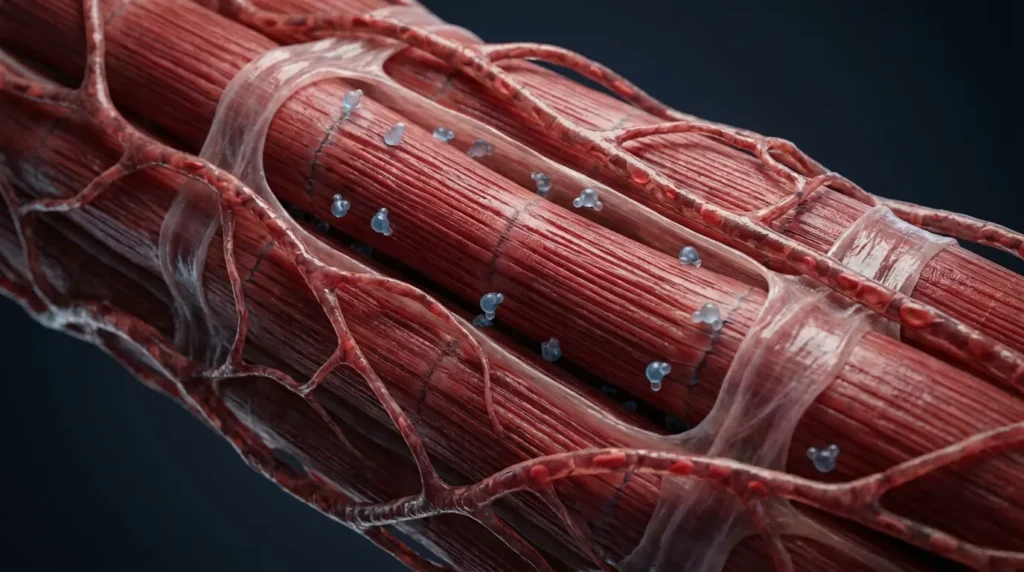
Here’s the part most articles skip: how long that water gain lasts varies, and studies disagree. The 2021 review of creatine myths, written by eleven creatine researchers, found that studies in the first few days consistently show more water retention. Some longer studies (5 to 10 weeks) found no lasting increase in total body water, while others found water rising alongside muscle mass. In one 8-week study that paired creatine with weight training, body water rose, but the ratio of water to muscle stayed about the same. That suggests the extra water went along with extra muscle instead of just sitting there. The reviewers concluded that creatine does not always lead to water retention. There’s no fixed date when everyone’s weight or appearance goes back to baseline.
Not everyone notices it. How much muscle creatine increases varies from person to person. Because meat and fish are major dietary sources of creatine, vegetarians and vegans often have lower muscle creatine stores at baseline.
Why Did I Gain 10 Pounds After Starting Creatine?
Research on loading phases typically reports about 1 to 3 kg (2 to 7 pounds) of early weight gain, mostly water. A 10 pound jump is more than that, so don’t automatically attribute all of it to creatine. The timing and other changes in your life matter.
Other changes may explain the increase, including eating more calories or carbohydrates (for example, if you also started a bulk), consuming saltier food, or gaining muscle and water as your training changes. If the weight keeps climbing, doesn’t settle after a few weeks, or comes with new swelling in your legs, face, or belly, seek medical advice. If swelling comes with shortness of breath or chest pain, seek urgent medical care. Don’t assume these symptoms are caused by creatine.
Can Creatine Cause Gas, Diarrhea, or Stomach Pain?
Sometimes, but the evidence is mixed. Here is what the three most useful pieces of research found:
| Research | Who Was Studied | What It Found | Limits |
|---|---|---|---|
| 2008 soccer study | 59 male soccer players, 28 days | Diarrhea: 55.6% with one 10g serving, 28.6% with two 5g servings, 35% with a dummy pill. Bloating did not differ between groups | Men only, and only tested those two patterns |
| 2025 trial | 24 adults (21 women), 28 days | 79.2% reported at least one stomach or fluid symptom. Stomach discomfort was reported more in the 14-day loading group | Everyone took creatine, no comparison group, sponsor-linked authors |
| 2026 review | Side-effect reports from 684 randomized trials | Any side effect was reported in about 1 in 7 trials, stomach issues in about 1 in 10. Higher doses and longer use were linked to more reports, though the authors called the effects small | Counts trials, not people, so it can’t predict your personal risk. Several authors report ties to creatine companies |
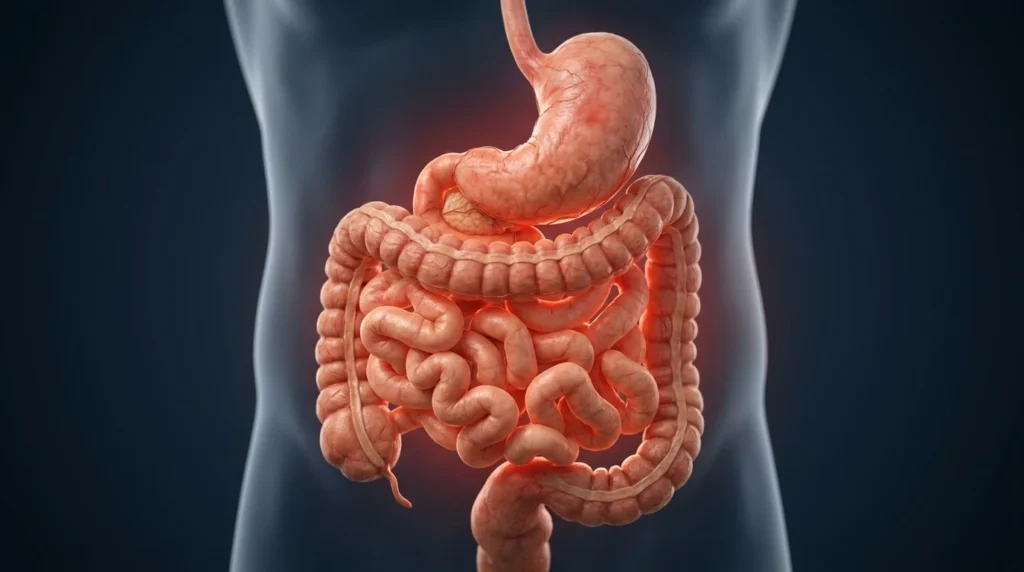
In the 2008 study, the group taking 10g in one serving had significantly more diarrhea than both the 5g twice a day group and the dummy-pill group, while the split dose group looked no different from the dummy-pill group (Ostojic & Ahmetovic, 2008). The study also tracked bloating, abdominal pain, nausea, and heartburn, and found no differences between groups for those (as described in Longobardi et al., 2025). It only compared those two dosing patterns, so it doesn’t prove 10g is a magic cutoff for everyone. Splitting a larger amount into smaller servings costs you nothing, though, so it’s a sensible first step.
The 2025 trial deserves care. All 24 people took creatine, either 5g a day or a 14-day loading phase (longer than the usual 5 to 7 days) followed by 5g. There was no group taking a dummy pill, so it can’t show how much of the symptoms creatine caused. Puffiness and stomach discomfort are also common in daily life, and the authors noted that menstrual cycle effects weren’t controlled for. Only 3 participants were men, none of them in the loading group. The study was published in 2025 in the Journal of Cardiovascular and Cardiology. Three of its four authors work for the company that sponsored it, and it was registered on ClinicalTrials.gov in September 2025, after the trial ended in July 2024. Treat it as an early signal, not proof.
The 2026 side-effects review points in a more reassuring direction overall, since side effects were reported in a minority of trials and placebo groups often reported them too. But its authors were careful: it compares studies, not individuals, and in one adjusted comparison, creatine groups were more likely than placebo groups to have a stomach problem reported. So the honest summary is that stomach upset is real for some people, usually mild, and hard to predict.
If you have IBS or a sensitive gut, you may notice stomach effects more. Smaller servings taken with food are a reasonable place to start, and your doctor can help if it keeps happening.
The 2008 study’s authors, and later reviewers, suggest that a large single serving may leave undissolved creatine in your gut, which can pull in water (Longobardi et al., 2025). That idea hasn’t been directly proven. Stirring creatine well into a full glass of liquid is harmless and worth trying, and warm or room-temperature water dissolves it better than cold. Whether better mixing eases symptoms hasn’t been tested.
Does the Loading Phase Cause More Bloating?
Probably a bit, but the evidence is thin. Loading is the part of creatine use most linked to a quick weight jump, and in the 2025 trial, stomach discomfort was reported more often by the loading group. Overall symptom rates did not differ significantly between the two groups.
You also don’t need to load. A classic comparison found that 3g a day for 28 days and 20g a day for 6 days raised muscle creatine by a similar amount, and the 2021 review concluded that 3-5g a day works and loading isn’t required. Loading fills your muscles faster, within about a week. Daily dosing gets to a similar level over a few weeks.
How to Reduce Creatine Bloating
- Skip the loading phase. Go straight to 3-5g a day. This avoids the fast early weight jump. Whether it prevents stomach symptoms hasn’t been proven, but it’s a low-risk change.
- Split larger servings. If you do load, or if a bigger serving upsets your stomach, spread it across the day instead of taking it all at once. One 2025 review suggests keeping each serving to about 5g or less (Longobardi et al., 2025).
- Mix it well. Stir it into a full glass of liquid. This is trial and error, not a proven fix.
- Consider taking it with food if your stomach is sensitive. It doesn’t change how much water goes into your muscles, but it may be easier to tolerate.
- Pick a plain creatine monohydrate from a reputable brand with third-party testing. Formulas with sweeteners or sugar alcohols can upset some stomachs on their own. Other forms like creatine HCl are marketed as gentler, but the 2021 review found no published studies showing they raise muscle creatine more than monohydrate, and they contain less creatine per gram.
- Pause if it’s not worth it. Stopping for a while is reasonable, and you can restart later with a smaller amount.
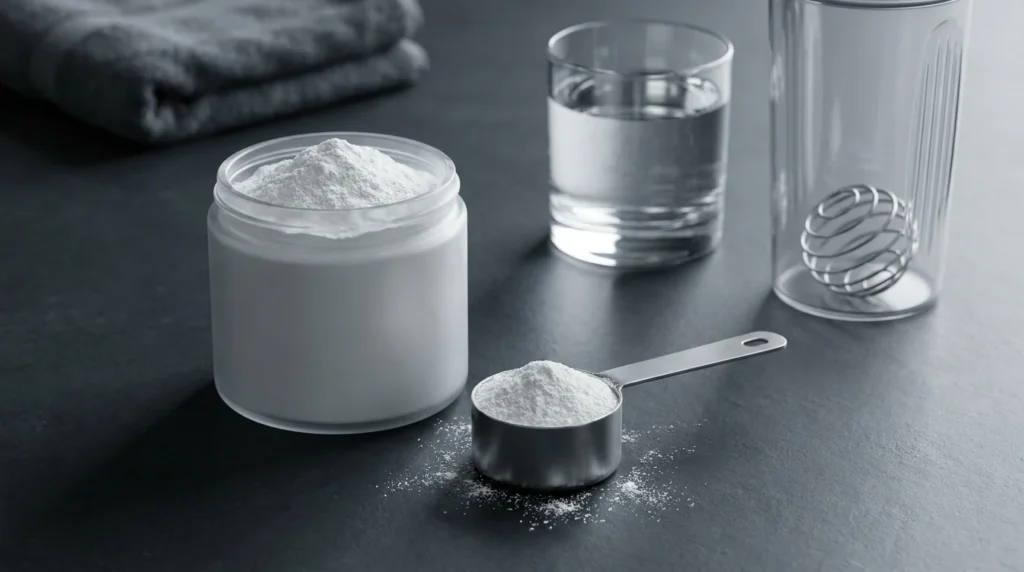
If you still feel bloated on 3-5g a day: first check the ingredient list for sweeteners or fillers. Then consider splitting your daily amount into smaller servings, which hasn’t been tested at this low dose but carries little downside. If symptoms continue, try pausing to see whether they ease. If they persist, get worse, or come with pain, vomiting, or swelling, see a doctor.
A few smaller things are worth testing on yourself, though the evidence behind them is thin: taking it in the morning versus at night, and noticing whether caffeine or acidic drinks seem to make your stomach worse. Puffiness from salty meals or extra carbs is a separate issue from creatine.
Does Creatine Make You Fat?
Creatine itself hasn’t been shown to add fat, but eating more than you burn still can. The confusion usually comes from the water weight already discussed. Across studies lasting from one week to two years, creatine has not been shown to increase fat mass (Antonio et al., 2021). In a review of 19 studies with 609 adults aged 50 and older who also did resistance training, people taking creatine lost a small amount more body fat percentage (about 0.55 percentage points) than those who didn’t (Forbes et al., 2019). The difference in total fat mass (about 0.5 kg) was not statistically significant, so it isn’t a confirmed effect, and the results may not apply to younger people. If the scale moved by a few pounds soon after you started creatine, water is the likely reason. A bigger or ongoing gain needs another explanation, such as eating more.
Is Creatine Safe? Kidneys, Other Concerns, and When to See a Doctor
Kidneys. Creatine naturally breaks down into creatinine, so taking it can raise the creatinine in your blood. Doctors use blood creatinine, and filtration estimates calculated from it, to judge kidney function. That’s why creatine can look alarming on a lab test if no one knows you take it. A 2026 review of 26 trials with 1,036 people found that creatine raised blood creatinine and lowered the creatinine-based filtration estimates. But when kidney filtration was measured directly, there was no significant change, and overall none in urea, albumin, or protein in the urine. The authors concluded this most likely reflects how creatine changes creatinine levels, not kidney injury. A second 2026 review of 20 trials also found higher blood creatinine without a significant change in estimated filtration, and called for trials longer than a year. No trials have tested creatine in people with kidney disease who are not on dialysis, so those results don’t apply to them. These findings are reassuring for healthy people, although evidence on long term use remains limited. The old myth that creatine harms kidneys traces largely to a 1998 case report in a man who already had kidney disease. Tell your doctor you take creatine before any blood test, and talk to them first if you have kidney disease.
Other groups to be careful with.
- Children and teenagers should only use creatine under a healthcare provider’s guidance.
- People with bipolar disorder should consult their doctor before using creatine. In one small trial of people with bipolar depression, two participants taking 6 g of creatine daily alongside their regular treatment switched into hypomania or mania early in the study (Toniolo et al., 2018). The study cannot establish that creatine caused these episodes, but the finding supports caution and medical supervision.
- Anyone on regular medication should mention creatine to their doctor, since research on interactions is limited.
See a doctor if you have severe or lasting diarrhea, vomiting, cramps that don’t go away, signs of dehydration, rapid unexplained weight gain or swelling, or bloating that comes with abdominal pain, comes on suddenly, interferes with daily life, or doesn’t improve after you’ve adjusted your dose and product.
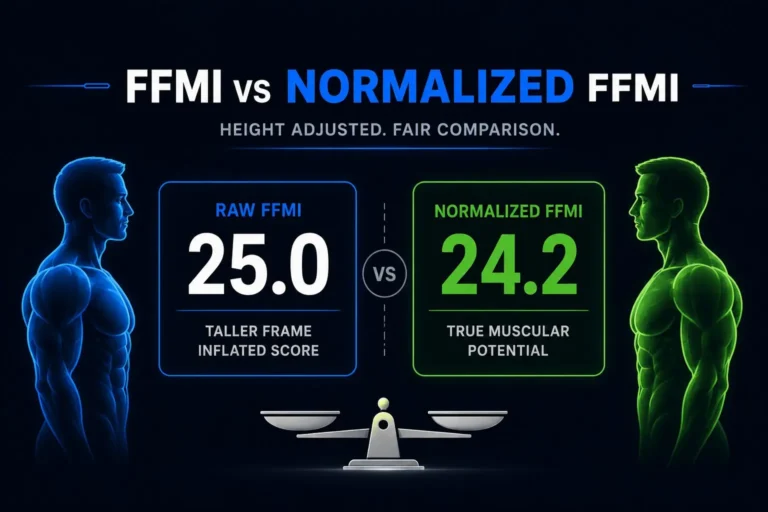
Can Creatine Affect Your FFMI?
Yes, temporarily. If you track your FFMI (fat-free mass index) to measure real muscle progress, the extra water from a loading phase can push your weight, and so your calculated FFMI, up without any new muscle. Measuring right after loading can overstate your progress. For a more honest trend, measure at a consistent point in your routine. Consistency matters more than any exact waiting period, since creatine-related changes vary from person to person. You can check your number with our FFMI Calculator.
Frequently Asked Questions
Does Creatine Cause Bloating?
It can, mostly early on. The most consistent effect is extra water inside your muscles, especially during loading. Stomach upset is less consistent and seems tied to large single servings. Large reviews find it’s reported in a minority of trials, but they can’t predict any one person’s risk.
How long does creatine bloating last?
There’s no fixed timeline. The early water gain is most noticeable in the first week or two of loading, but studies disagree on whether it lasts. Stomach upset from a large serving often improves once you split your dose. If bloating lasts more than a few weeks, or comes with pain or other symptoms, talk to your doctor.
Why did I gain 10 pounds after taking creatine?
That’s more than the typical 2 to 7 pounds of early water gain, so don’t automatically blame all of it on creatine. Look at timing, calories, carbs, and salt, and see a doctor if the gain is rapid, unexplained, or comes with swelling or other symptoms.
Why does creatine make me look puffy?
Water pulled into your muscles can create a fuller look, especially in the first week or two of loading. Puffiness can also come from salty food, normal water changes, or other causes, so new or unexplained swelling is worth a doctor’s visit.
Do I need to drink more water when taking creatine?
Drink normally according to thirst and activity. There is no good evidence that forcing extra water prevents creatine related bloating.
What are the signs creatine is working?
Weight gain and fuller-looking muscles alone don’t prove it’s working, since water and food can cause both. A more reliable sign is slow progress in your training, like an extra rep or a bit more weight, over several weeks.
Is it better to take creatine with or without loading?
Both raise your muscle creatine to a similar level eventually. Loading gets there in about a week but may bring a quicker weight jump. Daily dosing takes a few weeks.
Does creatine cause kidney damage?
Creatine raises blood creatinine, but a 2026 review found no significant change in directly measured kidney filtration. Healthy people generally don’t show kidney injury at normal doses, though long term data is limited. If you have kidney disease, ask your doctor first.
The Bottom Line
Creatine bloating usually turns out to be one of three things: water inside your muscles, stomach trouble that may be tied to a large serving or the product, or general puffiness whose cause is unclear. Skip the loading phase, take 3-5g a day, split larger servings, and mix it well. If you gain weight fast, swell up, or have symptoms that don’t improve after a few weeks, talk to your doctor instead of pushing through.
References
- Antonio J, Candow DG, Forbes SC, et al. (2021). Common questions and misconceptions about creatine supplementation: what does the scientific evidence really show? Journal of the International Society of Sports Nutrition, 18:13. Full text
- Ostojic SM, Ahmetovic Z. (2008). Gastrointestinal distress after creatine supplementation in athletes: are side effects dose dependent? Research in Sports Medicine, 16(1):15-22. DOI
- Wagner JC, Faulkner M, Faulkner W, Mullins F. (2025). Gastrointestinal and Fluid Retention Symptoms Associated with Creatine Monohydrate With and Without Loading Dose Over 28 Days of Supplementation. Journal of Cardiovascular and Cardiology, 3(4):1-5. DOI. Earlier preprint: medRxiv. Trial registry: NCT07176325.
- Gonzalez DE, Dickerson BL, Hines K, Chun J, Gil A, Forbes SC, Candow DG, Kreider RB. (2026). Creatine Supplementation Dose and Duration Are Not Associated with Increased Side Effects: A Structured Review and Study-Level Dose-Response Analysis of Randomized Controlled Trials. Sports, 14(4):137. DOI
- de Souza Almeida A, et al. (2026). Impact of creatine supplementation on kidney health: a systematic review and meta-analysis. International Urology and Nephrology. DOI
- Tsiaras A, Loufopoulos G, Theodoridis X, Liakopoulos V, Poulia KA, Chourdakis M. (2026). The effect of creatine supplementation on kidney function: a systematic review and meta-analysis of randomized controlled trials. Journal of Renal Nutrition. DOI
- Forbes SC, Candow DG, Krentz JR, et al. (2019). Changes in Fat Mass Following Creatine Supplementation and Resistance Training in Adults ≥50 Years of Age: A Meta-Analysis. Journal of Functional Morphology and Kinesiology, 4(3):62. Full text
- Longobardi I, Solis MY, Roschel H, Gualano B. (2025). A short review of the most common safety concerns regarding creatine ingestion. Frontiers in Nutrition, 12:1682746. DOI
- Fares BJ, Zhou C, Fabiano N, et al. (2026). The Effect of Creatine Monohydrate on Mental Disorders: A Systematic Review of Randomized Controlled Trials. The Canadian Journal of Psychiatry. DOI
This article is for general information and is not medical advice. Talk to a doctor before starting any supplement, especially if you have a medical condition or take medication.